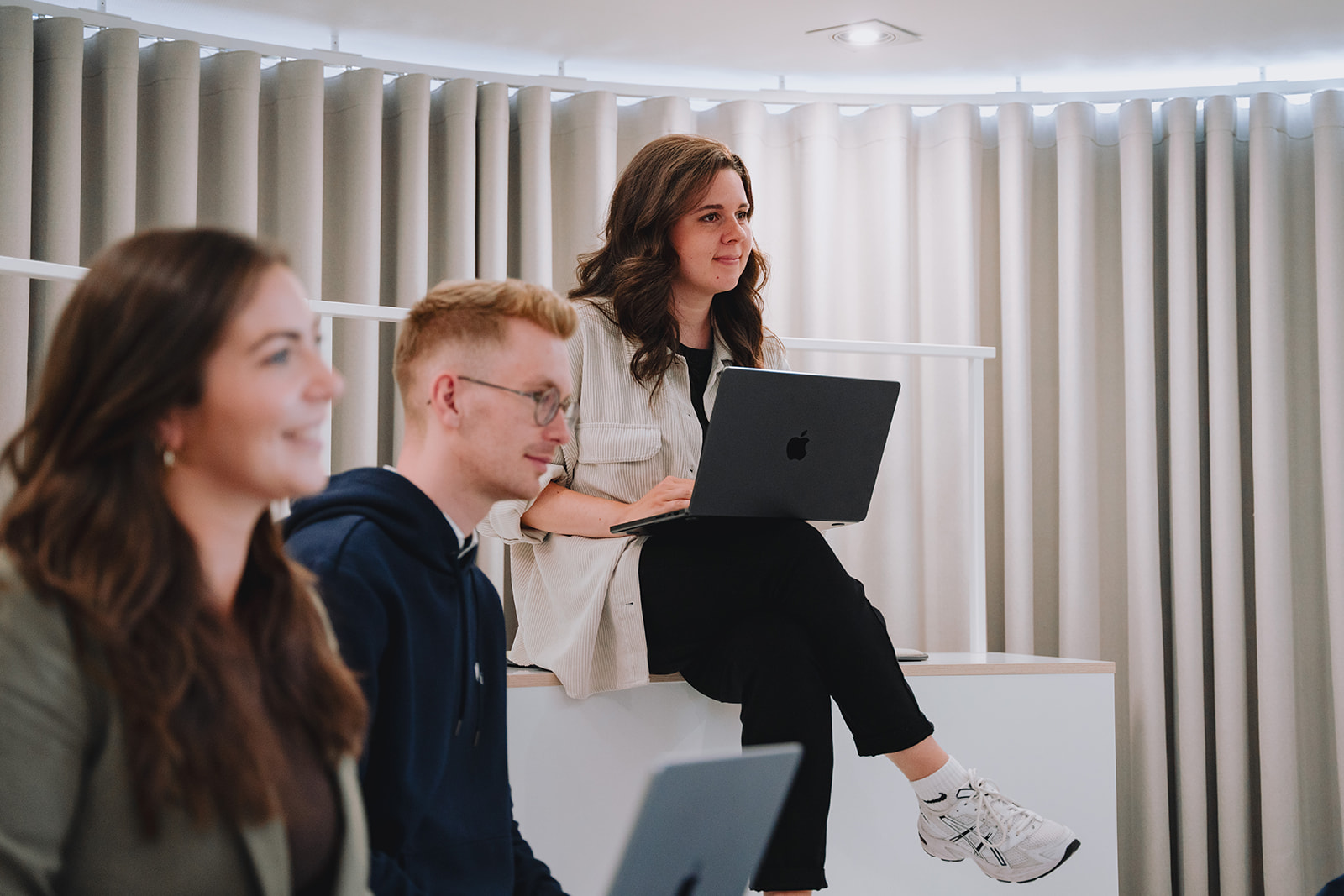
Would you like to contact us?
We'd love to hear from you.

goconut presentation
Please select a day from the calendar.
The focus crisis at work – Why we need to relearn deep thinking

In the latest episode of our podcast “Next. Level. working,” we opened a can of worms that many would prefer to keep closed: the systematic destruction of our concentration by modern work environments. Here you can find out why we urgently need a cognitive U-turn.
FAQ
Why is our productivity falling despite digital tools? Real multitasking doesn't exist biologically. We do “task switching.” Every time we jump between emails, Slack, and tasks, the brain loses time and energy. Studies show that it takes us up to 20 minutes after every distraction to get back into full focus. Since we statistically look at our mobile phones every 11 minutes, many knowledge workers do not achieve a state of low concentration (“deep work”) throughout the day.
What are the consequences of “fragmented work” for the company? Cognitive load increases, while problem-solving skills fall. If you are constantly interrupted, you lose up to 10 IQ points — an effect that is comparable to lack of sleep. In the long term, this continuous stress leads to mental exhaustion and a decline in the quality of strategic decisions. Innovation is replaced by superficial processing.
How can rooms promote the ability to concentrate? Rooms control behavior. Companies need analog protection zones such as “libraries” or “silent zones” where technology is prohibited. Biophilic design (use of wood, plants, natural light) has been shown to reduce cortisol levels. Such retreats enable the nervous system to switch from the mode of continuous excitation to the mode of reflection.
The brain in browser mode: The hidden costs of fragmentation
In the modern office world, multitasking is often mistakenly misunderstood as a competence. Neuroscience is clear here: Our brain cannot process complex tasks simultaneously. What we are experiencing is Task switching — a rapid change of tasks that causes massive “switching costs.”
Every time we jump from a strategy paper to a Slack message, the brain must deactivate the mental work program and load a new one. This process costs us up to 40% of effective working time. The economic damage is in the hundreds of billions. Anyone who believes that they are more efficient through constant availability is making a dangerous mistake: The effective IQ drops by an average of 10 points with this working style. The brain works in a chronically insomniac mode.
The handwriting hack: Why the hand helps the head
A central pillar for the way out of the focus crisis is the renaissance of the analog. Recent EEG studies (e.g. NTNU under Audrey van der Meer) show that handwriting is cognitively far superior to typing. When writing letters by hand, complex sensorimotor processes arise. The brain receives continuous feedback via visual and proprioceptive channels.
The result is a much stronger neural network, particularly in regions that are responsible for memory formation. In contrast, typing is a monotonous motor action that barely provides the brain with any stimulating stimuli. Particularly critical: According to research, anyone who completely outsources writing to AI tools loses up to 55% of his brain activity during the process. The result is a faster loss of content and a weakening of personal intellectual performance.
Architecture as a cognitive shelter: away from the fruit basket and towards acoustics
The physical environment is not a “nice-to-have” but a strategic success factor. Research shows that acoustics are the worst-rated aspect in modern offices. 44% of employees are dissatisfied with the background noise. The problem is the so-called “Irrelevant Speech” — Background discussions that we can understand These use exactly the language processing centers that we need for concentrated reading or writing.
The office of the future must function as a “landscape of opportunities”:
- Analog creative zones: Rooms with whiteboards and paper dispensers that invite haptic interaction.
- Deep work cells: Acoustically encapsulated areas without digital infrastructure that use the “library principle” (collective silence).
- Biophilic design: The integration of natural materials such as wood and real plants is not a decorative decision. It has been shown to lower cortisol levels and promotes recovery after periods of stress.

The Meeting Diet: Organizational Digital Detox
Interior design alone falls short when corporate culture sabotages focus. The introduction of meeting-free days is one of the most effective levers of modern organization. Studies show:
- 2 meeting-free days a week increase productivity by 71%.
- At the same time, the staff's sense of stress decreases by 57%.
Companies like Shopify or GitLab are showing the way: They prioritize asynchronous communication. Instead of spending hours in inefficient meetings, time is protected for “handyman time” — uninterrupted blocks of deep work. Technology is specifically used as an enabler, for example through AI protocol tools that make it possible to be present at a meeting without a laptop.
Conclusion: Focus as a competitive advantage
The “always-on” culture is reaching its biological limits. Analog zones and organizational focus windows are not a step back in time, but a necessary upgrade for our cognitive sustainability. In a world where AI takes over the routine, the human ability to think deeply, analogously is becoming the most valuable competitive advantage.
Today, the office must be the place that protects us from the digital flood instead of handing it over to us without protection.